
Buying guide
Garage door styles and materials: a buyer's guide
The right garage door depends on your home's style, how you use the garage, and how much upkeep you want. For most Bay Area homes, an insulated steel door is the practical default; carriage-house, wood-look and full-view glass doors change the look of the whole house.
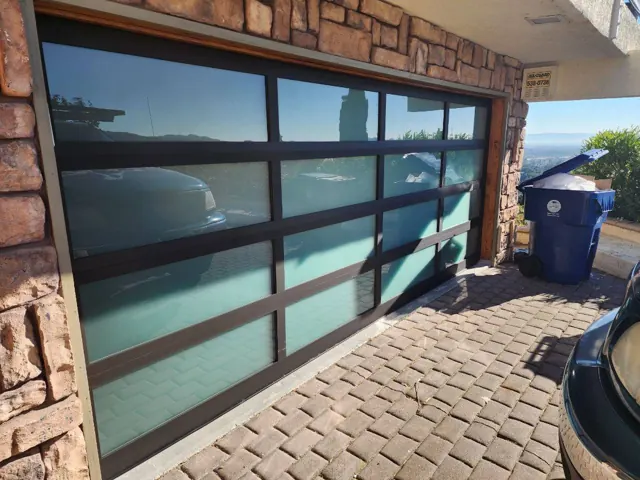
A garage door can be a third of the front of a house. Replacing it is one of the most visible changes you can make to curb appeal, and the right choice also makes the garage quieter, cooler and more secure.
Styles
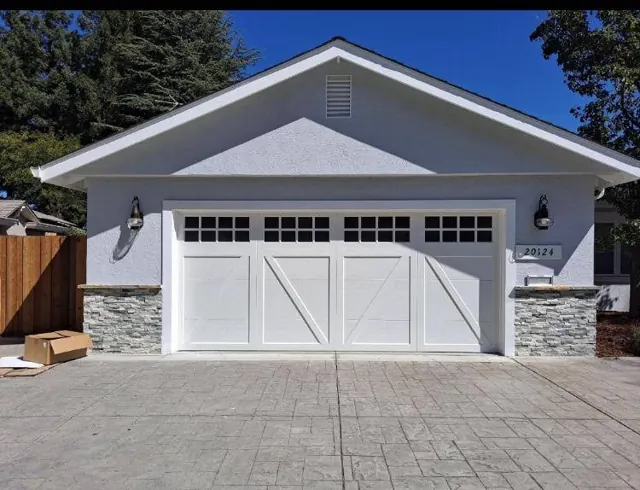
- Raised or long panel. The classic look on most Bay Area tract homes from the 1950s through the 1990s. Works with almost any house.
- Carriage house. Looks like two swing-out doors, with decorative handles and hinges, but opens overhead like any other door. Popular on craftsman and farmhouse styles.
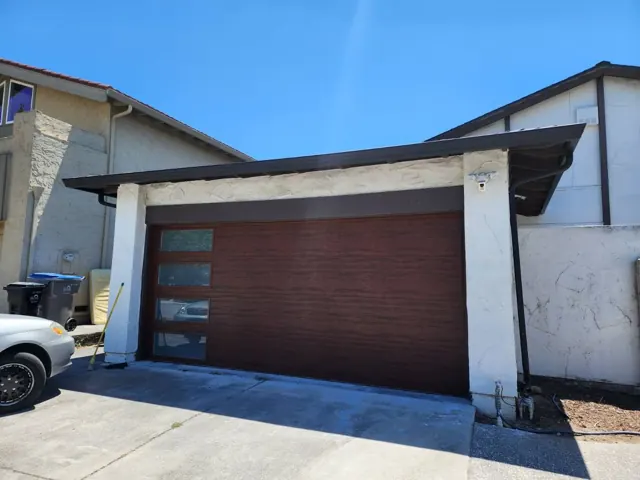
- Modern flush or flat panel. Smooth or grooved panels, often with horizontal lines or a wood-grain finish. Suits mid-century and contemporary homes.
- Full-view (glass). Aluminum frames with clear, frosted or tinted glass. A strong modern statement that lets light into the garage.
- Windows. A row of windows on the top section adds light while keeping privacy. Decorative inserts change the style.
Materials
| Material | Good for | Watch out for |
|---|---|---|
| Steel | Price, strength, low upkeep; most styles | Can dent; rusts if scratched near the bay |
| Insulated steel (double or triple layer) | Quieter, stiffer, cooler garage | Heavier, so springs must match |
| Wood | Rich, custom look | Needs refinishing; heavy |
| Wood-look (composite or steel with woodgrain) | The wood look with less upkeep | Quality varies by finish |
| Aluminum and glass | Modern full-view look, light | Less insulation; glass type matters |
Insulation: do you need it in the Bay Area?
Near the bay, winters are mild and an uninsulated door can be fine. Insulation helps more when:
- the garage is attached and shares a wall with living space, or there's a bedroom above it;
- you're in a hotter inland area like Livermore, Pleasanton, Dublin or Walnut Creek, where garages bake in summer;
- you use the garage as a gym, workshop or office;
- you want a quieter, more solid door. Insulated doors are stiffer and rattle less.
Insulation is rated by R-value; higher means better insulation. Polyurethane foam usually gives a higher R-value for the same thickness than polystyrene panels.
Other things to decide
- Color. Match the trim or the front door. Light colors stay cooler in the sun.
- Opener. A new, heavier door may need a new opener. See opener types.
- Springs. New doors get springs sized to their weight. If your old door used extension springs, it's the moment to switch to torsion.
- Weather seal. A new bottom seal and side and top seals keep out wind, water and pests.
- HOA rules. Many HOAs control door style and color. Check before you order.
Questions
What is the most popular garage door style?
Raised- or long-panel steel doors are the most common, especially on older tract homes. Carriage-house and modern flush doors are the most popular upgrades.
Is an insulated garage door worth it?
It's worth it if the garage is attached, has a room above it, is used as living or work space, or is in a hot inland area. Insulated doors are also quieter and more dent-resistant.
What's the best garage door material for the Bay Area?
For most homes, insulated steel: low upkeep, strong, and available in every style. Wood-look finishes give the wood appearance with far less maintenance.
Can I add windows to my existing garage door?
Often yes, depending on the door model. Replacing the top section with a window section is common; ask for a free estimate.